

On this page
Scale Stage ($50M+ ARR)
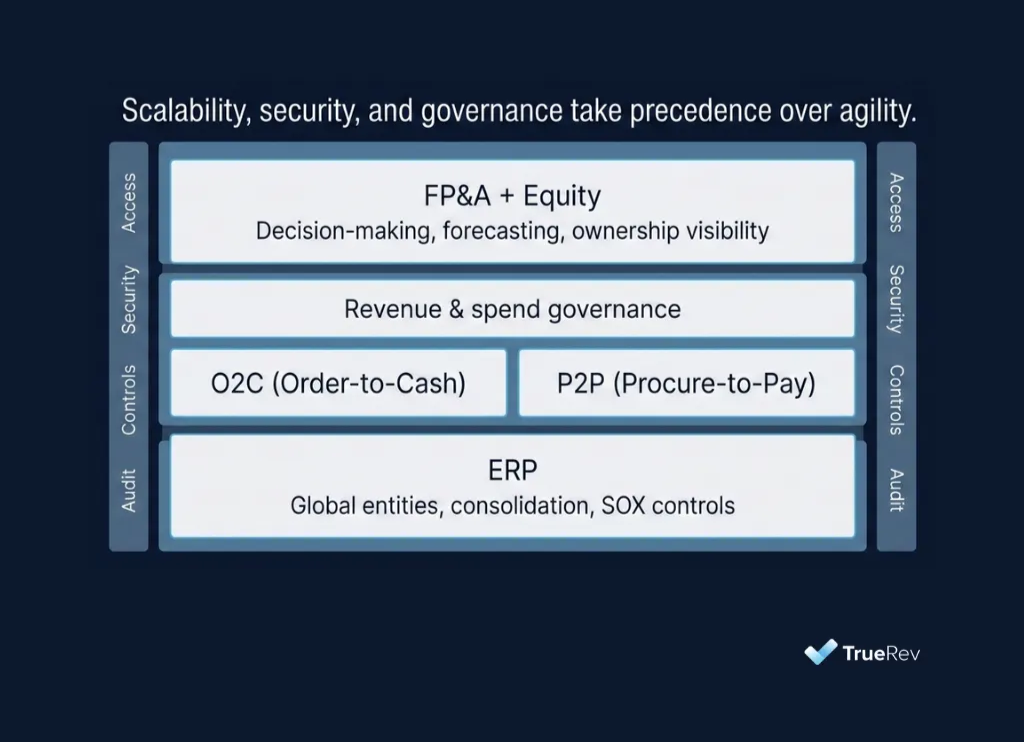
At $50M+ ARR, the company is likely preparing for an exit (IPO or strategic acquisition). The stack must be SOX-compliant, capable of handling global consolidation (dozens of entities), and robust enough to support hundreds of users. Scalability, security, and governance take precedence over agility.
1. ERP (Enterprise Resource Planning)
Option 1: NetSuite OneWorld
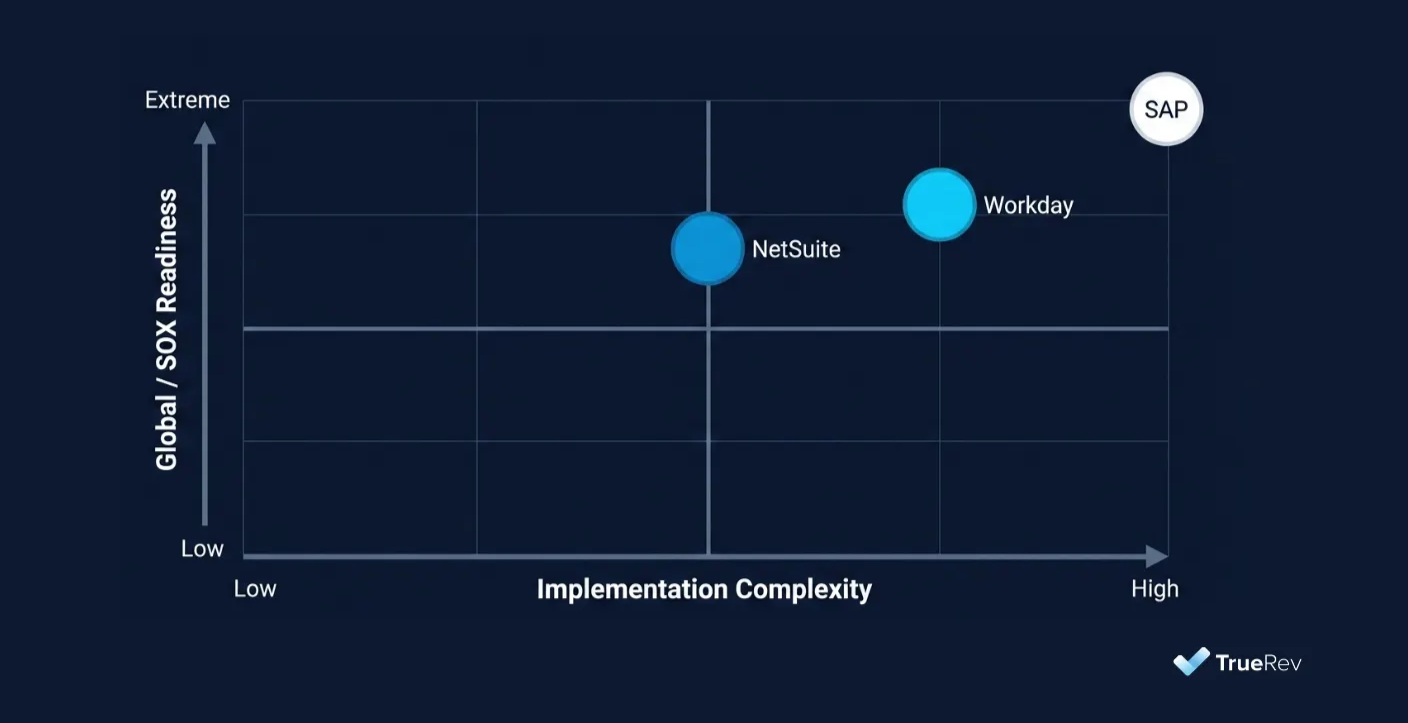
NetSuite OneWorld is the standard for multinational enterprises. It allows for real-time consolidation of subsidiaries with different currencies, tax jurisdictions, and reporting standards. It is the "safe choice" for any CFO looking to go public, ensuring that financial controls are rigorous and auditable.
AI Capabilities (2026):
- Intelligent Cash Management: Predictive AI that models global cash positions across all subsidiaries, optimizing currency conversion and working capital management.50
Pros & Cons:
- Pros: Unrivaled multi-subsidiary capabilities; massive ecosystem; highly auditable.
- Cons: High TCO; dependency on specialized administrators; UI is dated compared to modern tools.53
Pricing:
- Enterprise agreements often exceed $100k-$200k/year.
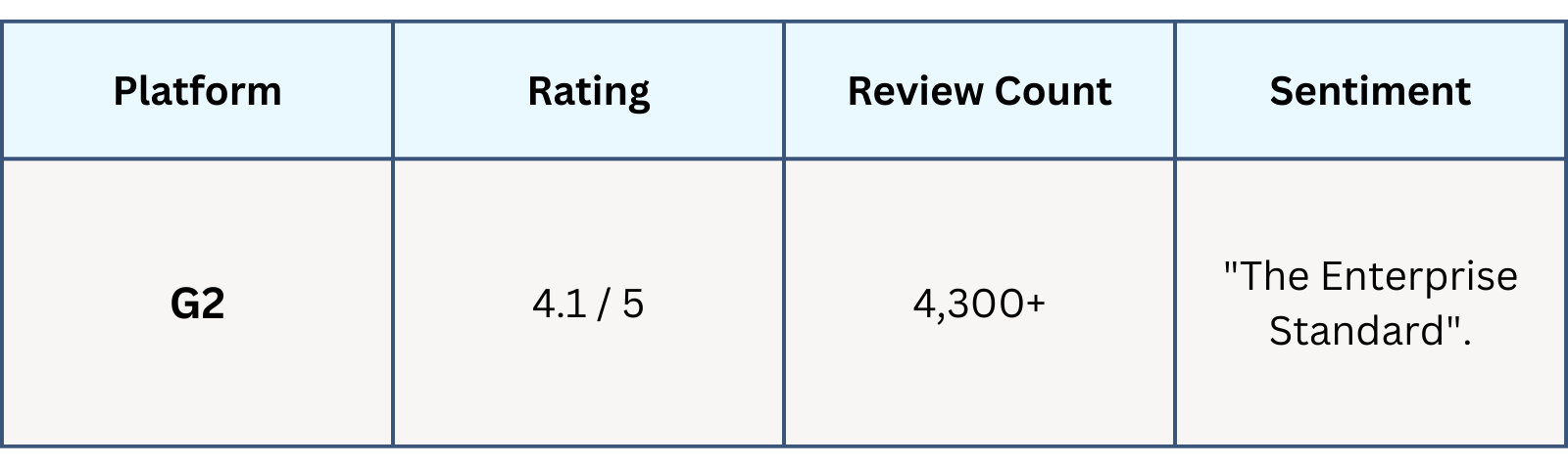
Review Data:
Option 2: Workday Financial Management
Workday is the choice for large enterprises that want to unify Finance and HR. Its object-oriented architecture (vs. account-based) allows for incredible flexibility in reporting and organizational change (e.g., restructurings). It is known for a superior, consumer-grade UI compared to legacy ERPs and is increasingly winning deals in the tech enterprise sector.
AI Capabilities (2026):
- Journal Insights: Machine learning that detects anomalies in journal entries in real-time, flagging potential fraud or errors before the close, acting as a proactive compliance engine.
Pros & Cons:
- Pros: Unified HCM and Finance data; modern architecture; very high user satisfaction for an ERP.
- Cons: Extremely expensive; lengthy implementation; generally suited for larger mid-market/enterprise ($100M+).
Pricing:
- Enterprise pricing (typically significantly higher than NetSuite).
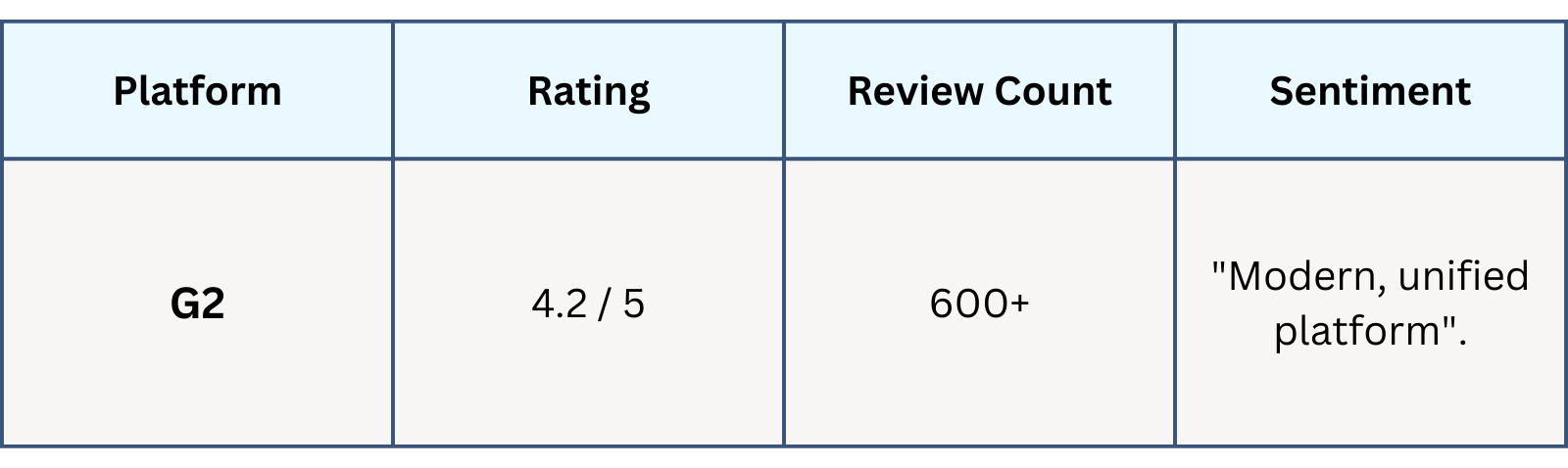
Review Data:
Option 3: SAP S/4HANA Cloud
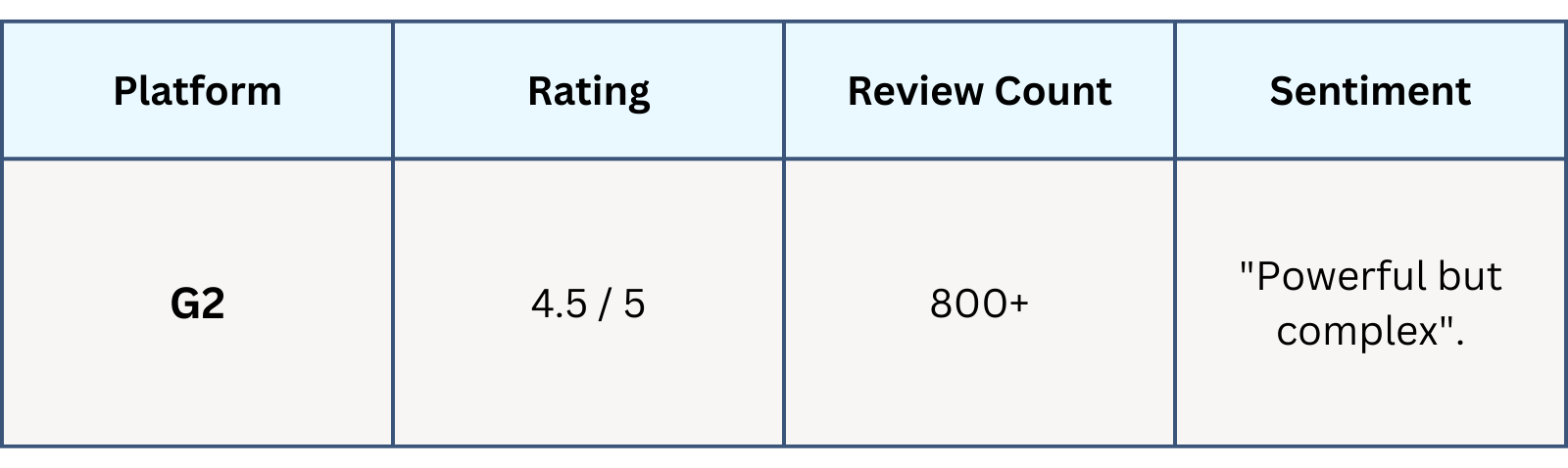
SAP is for the Global 2000 or complex industrial SaaS companies. S/4HANA Public Cloud is their answer to NetSuite, offering the power of SAP's in-memory computing (HANA) in a SaaS model. It is best for companies with complex supply chains, massive transaction volumes, or those expanding into hardware-enabled SaaS.
AI Capabilities (2026):
- Joule Copilot: SAP's generative AI assistant that navigates across the entire SAP ecosystem to answer contextual questions and automate complex workflows, reducing the barrier to entry for users.
Pros & Cons:
- Pros: In-memory processing speed; unmatched depth for complex global operations; deep industry verticals.
- Cons: High complexity; requires specialized SAP integrators; often "overkill" for simple digital SaaS.
Pricing:
- Enterprise pricing.
Review Data:

2. Order-to-Cash (O2C)
Option 1: Zuora
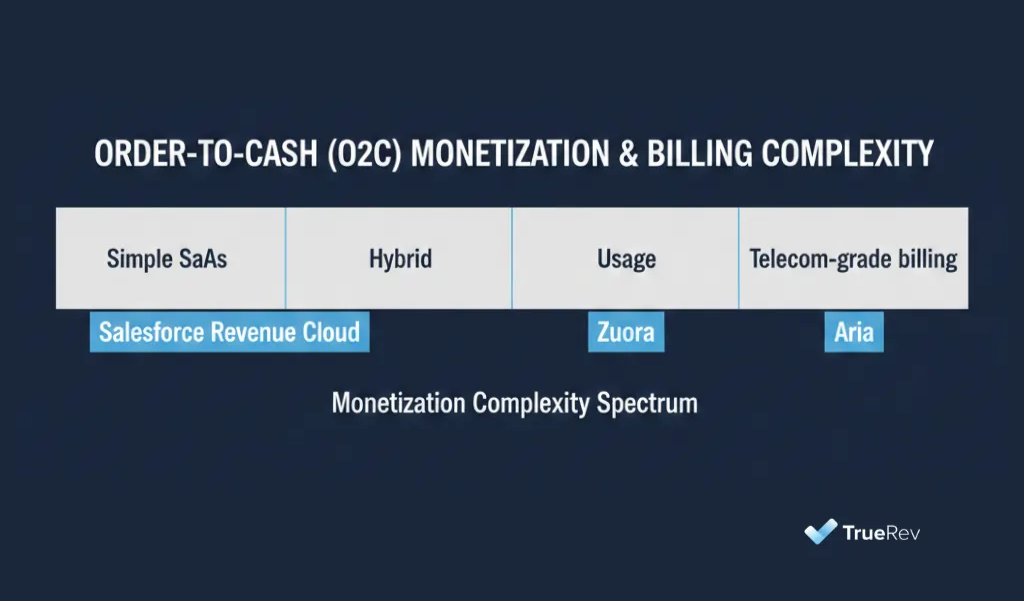
Zuora coined the "Subscription Economy." It is an enterprise-grade billing and revenue platform designed to handle any monetization model (hybrid, consumption, one-time). It is the go-to for large enterprises pivoting to subscription models (e.g., IoT, Media) and needing extreme flexibility in pricing packaging.
AI Capabilities (2026):
- Zuora AI: Agents that optimize pricing packaging and predict customer churn propensity based on billing signals, turning the billing system into a growth engine.
Pros & Cons:
- Pros: Extremely flexible monetization engine; strong enterprise track record.
- Cons: Implementation is notorious for being long and expensive; complex maintenance.
Pricing:
- Enterprise quoting (often $50k+).
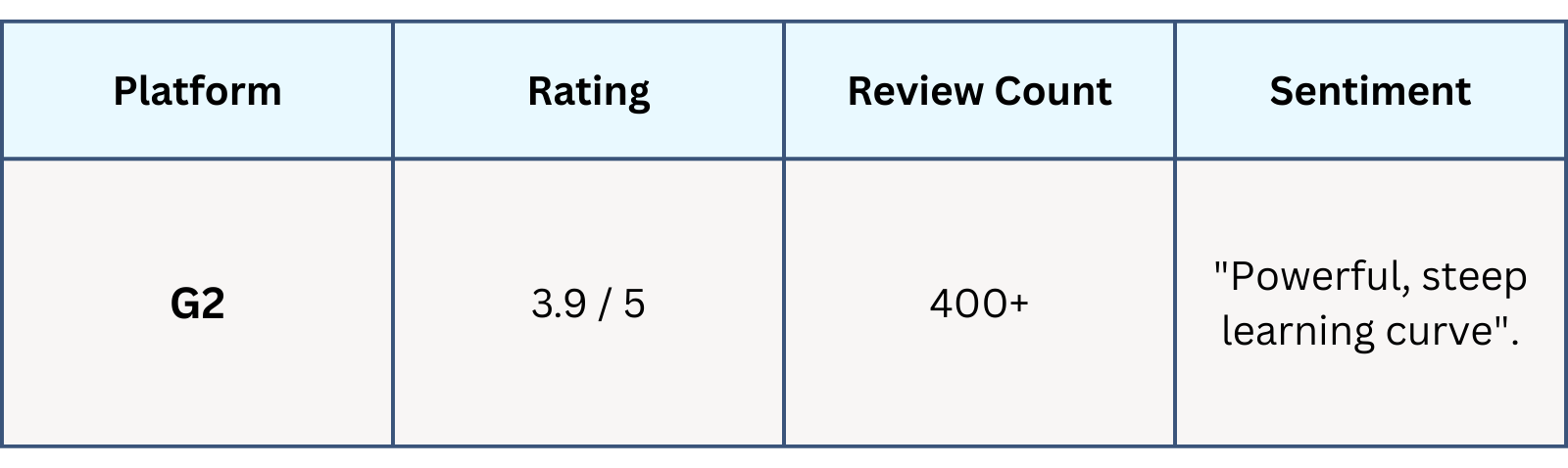
Review Data:
Option 2: Aria Systems
Aria is the "Billing for the Enterprise" specialist. Unlike Zuora which targets broad subscription markets, Aria focuses on complex, high-volume industries (Telecom, Tech, Media) where billing logic is incredibly intricate. It excels at handling hierarchies and account structures that would break simpler systems.
AI Capabilities (2026):
- Aria Billie: An AI agent framework that optimizes customer support and billing inquiries, reducing the "cost to serve" by autonomously resolving billing disputes.
Pros & Cons:
- Pros: Handles massive scale and complexity better than almost anyone; cloud-native architecture.
- Cons: Niche focus; not for simple SaaS.
Pricing:
- Enterprise.
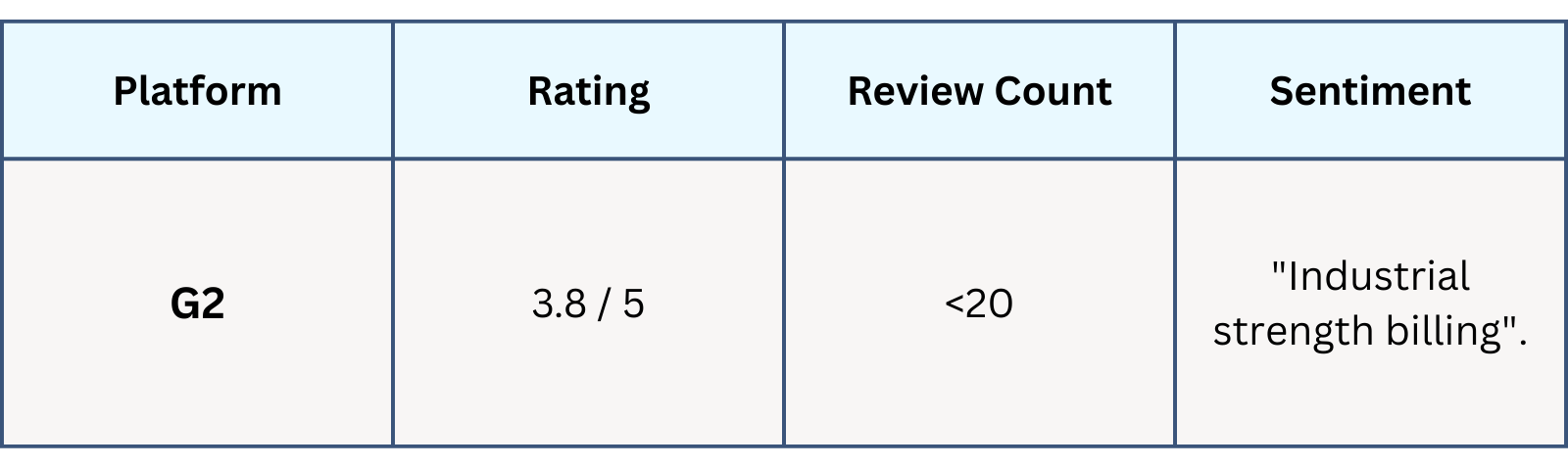
Review Data:
Option 3: Salesforce Revenue Cloud
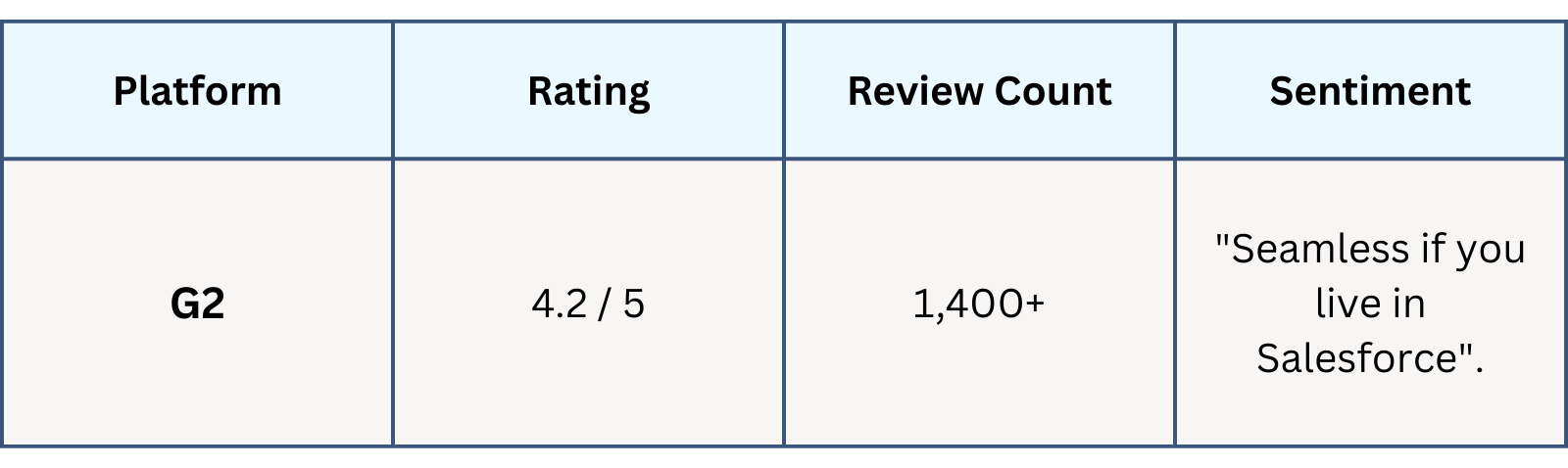
This is the choice for companies that want to unify Sales and Finance on the Salesforce platform. It combines CPQ (Configure, Price, Quote) with Billing. By keeping everything on the Salesforce object model, it eliminates the "integration tax" between CRM and Billing, ensuring a single source of truth for customer data.
AI Capabilities (2026):
- Einstein GPT: Generative AI that helps sales reps configure complex quotes and optimizes discount approvals based on margin impact, streamlining the "Quote-to-Cash" cycle.
Pros & Cons:
- Pros: Native Salesforce integration; seamless CPQ-to-Cash workflow.
- Cons: Billing module is still maturing compared to specialized players like Zuora; Salesforce data storage costs can be high.
Pricing:
- Per user pricing ($75 - $150/user/mo) plus add-ons.
Review Data:
3. Procure-to-Pay (P2P)
Option 1: Coupa
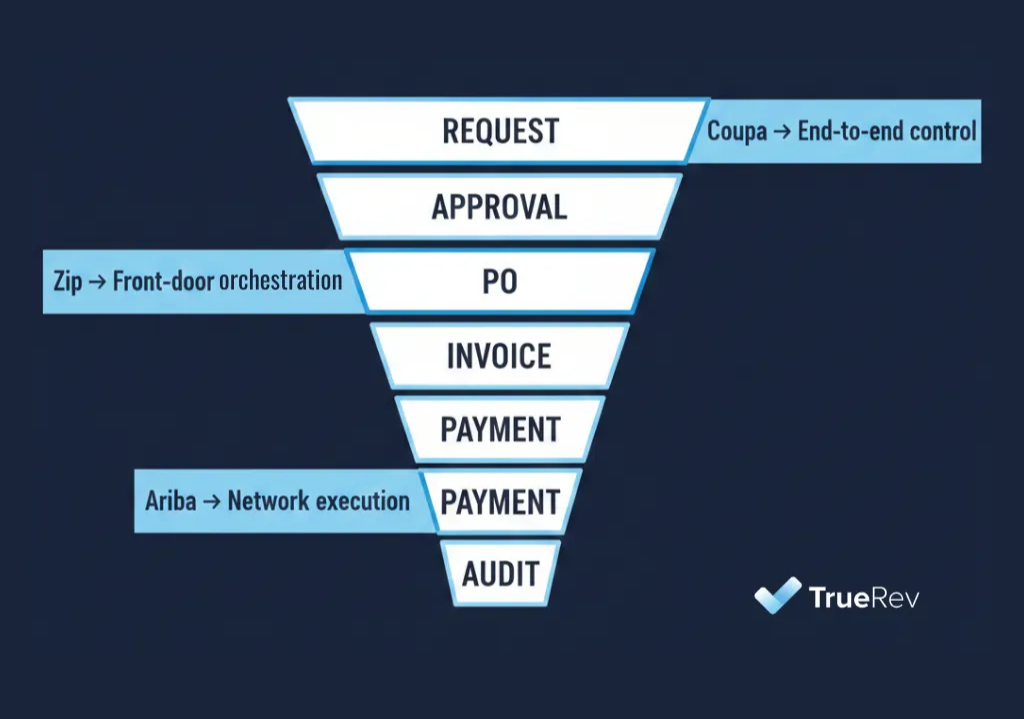
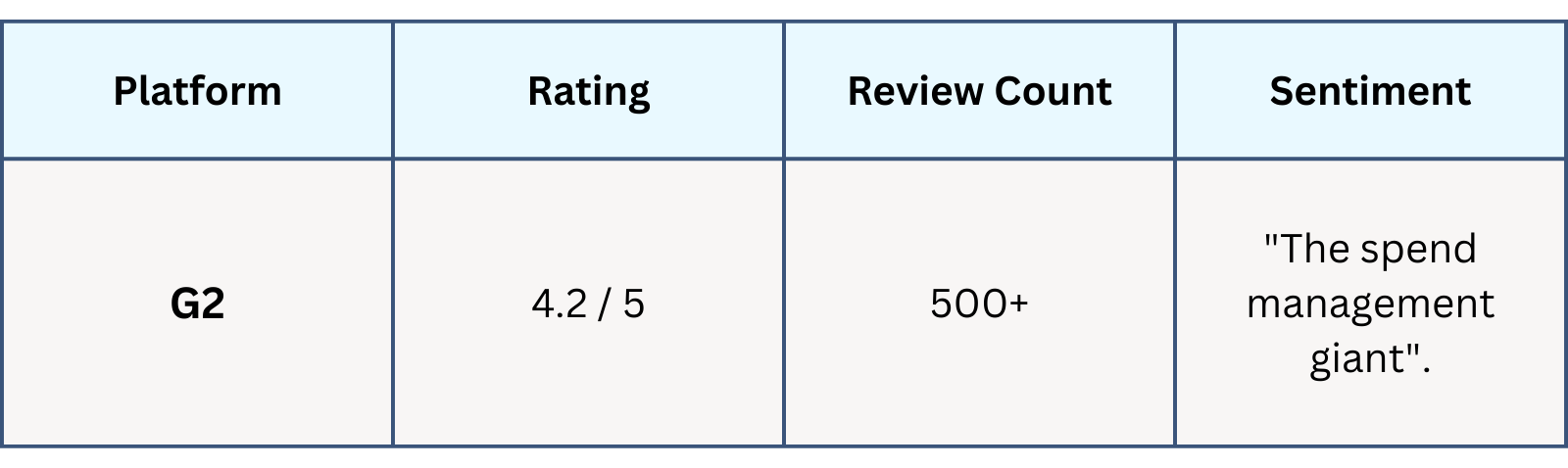
Coupa is the definition of "Business Spend Management" for the enterprise. It goes beyond AP to cover sourcing, contract management, and treasury. It is designed to save large companies money by consolidating spending power and enforcing strict compliance across thousands of employees.
AI Capabilities (2026):
- Community Intelligence: AI that benchmarks your spend against trillions of dollars of transactional data from other Coupa customers to suggest savings (e.g., "You are overpaying for laptops compared to the market average").
Pros & Cons:
- Pros: Massive ROI through savings; comprehensive suite; market leader.
- Cons: Very expensive implementation; UI is aging.
Pricing:
- Enterprise.
Review Data:
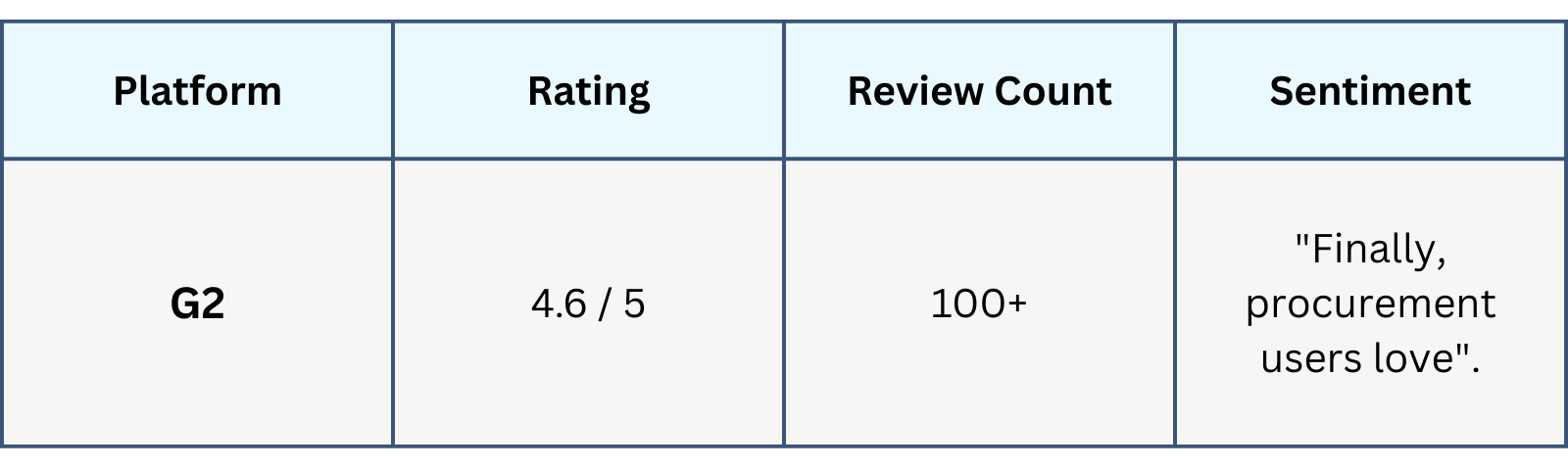
Option 2: Zip
Zip is the "Intake-to-Procure" leader. It solved the problem that "nobody likes using procurement software" by building a consumer-grade front door for requests. It sits on top of ERPs and P2P systems to orchestrate the approval process across Legal, IT, and Finance, making it the "user experience" layer for spend.
AI Capabilities (2026):
- Zip AI: Agents that automatically review vendor contracts for risk (redlining), validate security documents (SOC2), and pre-code purchase requests, significantly speeding up approval cycles.
Pros & Cons:
- Pros: Incredible user adoption; orchestrates complex cross-functional approvals.
- Cons: Primarily an "intake" layer (though expanding into payments); often requires a P2P backend like NetSuite/Bill.com.
Pricing:
- Platform fee + user tiers.
Review Data:
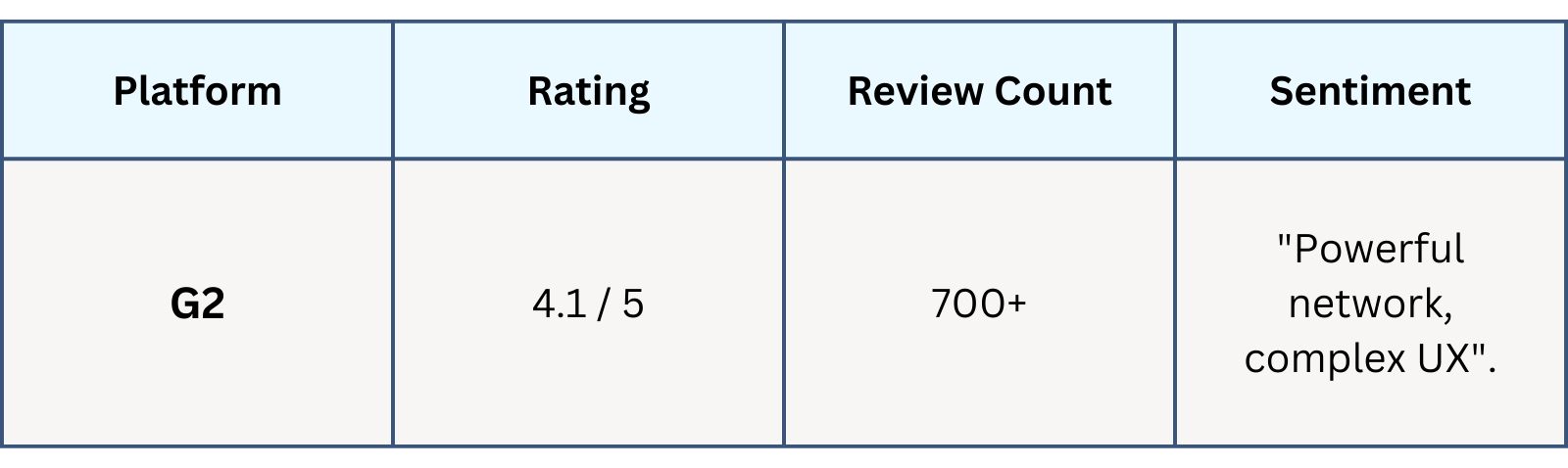
Option 3: SAP Ariba
Ariba is the network choice. It connects buyers and suppliers on the Ariba Network, facilitating paperless transactions on a massive scale. It is the default for heavy industrial or highly complex supply chain procurement where the supplier relationship is as critical as the transaction itself.
AI Capabilities (2026):
- Supplier Risk AI: Predictive monitoring of supplier health and supply chain disruption risks, allowing enterprises to be proactive rather than reactive.
Pros & Cons:
- Pros: Largest supplier network in the world; deep SAP integration.
- Cons: Complex supplier onboarding; high fees for suppliers.
Pricing:
- Enterprise.
Review Data:
4. FP&A (Financial Planning & Analysis)
Option 1: Anaplan
Strategic Positioning:
Anaplan is "Connected Planning" for the enterprise. It is a highly flexible, calculation-heavy platform that can model anything from territory planning to supply chain logistics. It is Excel-like in flexibility but enterprise-grade in scalability, used by the largest companies to solve their most complex modeling problems.
AI Capabilities (2026):
- PlanIQ: AI-driven forecasting that incorporates external signals (economic data, weather) into your financial models to improve accuracy, moving beyond simple historical trend lines.
Pros & Cons:
- Pros: Can model literally anything; highly scalable engine.
- Cons: Requires "Anaplanners" (specialized architects) to build and maintain; expensive.
Pricing:
- Enterprise license.
Review Data:
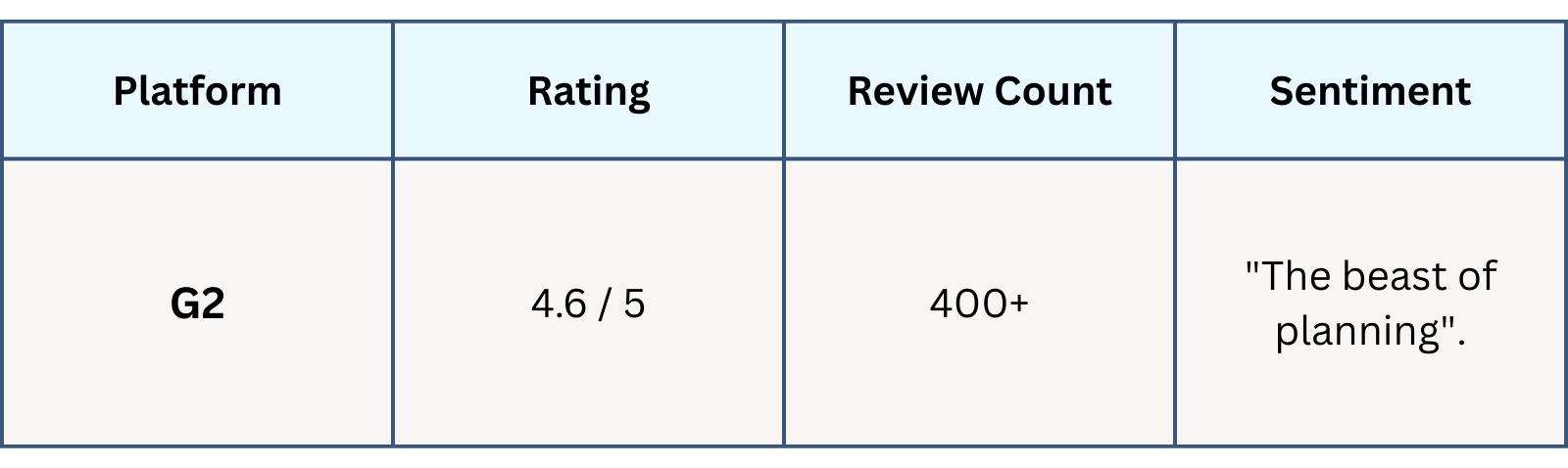
Option 2: Pigment
Pigment is the modern challenger to Anaplan. It offers similar multi-dimensional modeling power but with a significantly more modern, colorful, and intuitive UI. It is gaining rapid traction in tech-forward enterprises that want Anaplan power without the legacy feel, emphasizing "scenarios" and "dimensionality" in a user-friendly package.
AI Capabilities (2026):
- Pigment AI: Natural language query of scenarios ("Show me the impact of a 5% hiring freeze on Q4 cash flow") and automated data visualization, democratizing access to complex model outputs.
Pros & Cons:
- Pros: Beautiful UI/UX; flexible modeling; rapidly growing feature set.
- Cons: Still building out the ecosystem of implementation partners compared to Anaplan.
Pricing:
- Mid-to-High Enterprise pricing.
Review Data:
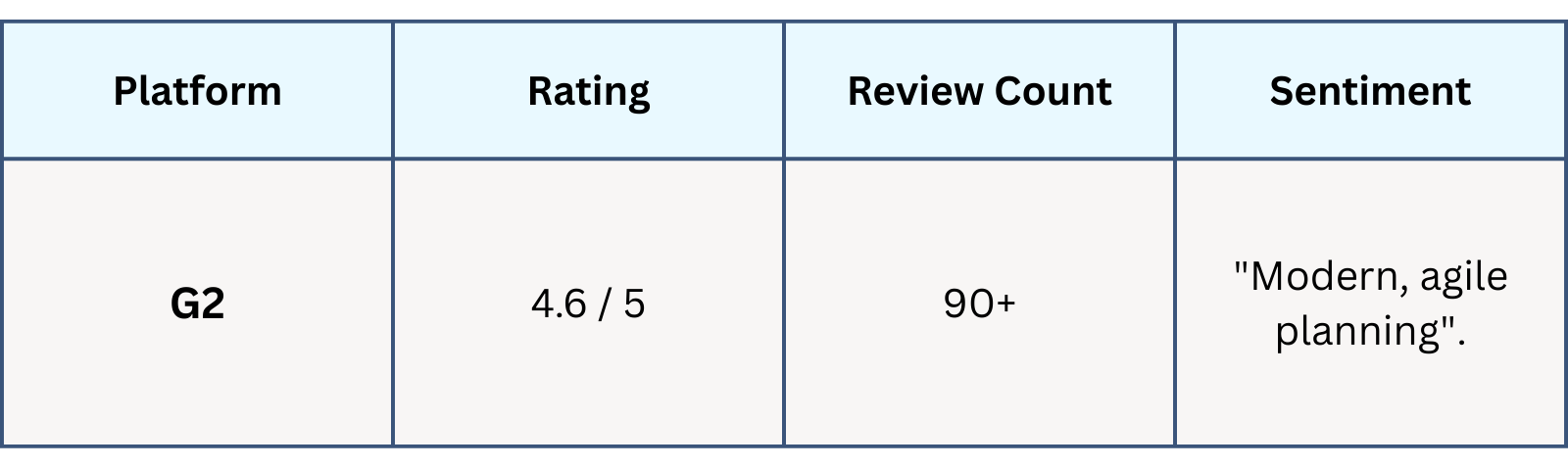
Option 3: Workday Adaptive Planning
Formerly Adaptive Insights, this is the standard for "cloud FP&A." It balances ease of use with power better than almost any other enterprise tool. It is widely used by SaaS CFOs for its pre-built SaaS logic and reliability, often serving as the "safe bet" for scaling finance teams.
AI Capabilities (2026):
- AI Anomaly Detection: Automatically flags planning inputs that deviate from historical trends (e.g., "This travel budget looks 300% higher than usual"), helping to clean plan data before it is finalized.
Pros & Cons:
- Pros: Great balance of power/usability; deep Workday integration (but works standalone); huge user community.
- Cons: Modeling can be less flexible than Anaplan for non-finance operational data.
Pricing:
- Enterprise.
Review Data:
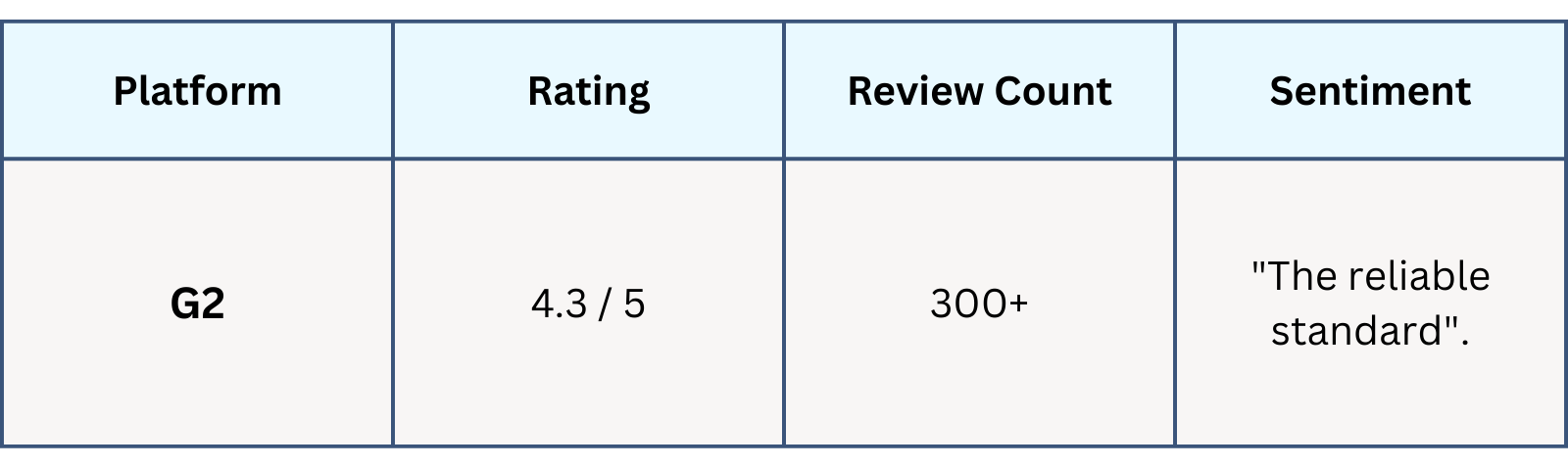
Equity Management
Managing the Cap Table is a critical finance function. The wrong tool here leads to legal bills, messed up 409As, and angry employees.
Option 1: Carta
Carta is the market utility. It holds the vast majority of private company cap table data. If you are venture-backed, your investors likely expect Carta. It offers an end-to-end suite from issuance to 409A valuations to liquidity/tender offers, effectively becoming the "central bank" for private equity.
Review Data:
- G2: 4.5 / 5 (Strong market leader).
- Pros: Investor standard; robust 409A team; liquidity products.
- Cons: Pricing can increase significantly with scale; support has been mixed at times.
Option 2: Pulley
Pulley is the "Founder-Friendly" challenger. It is growing rapidly by offering better pricing, faster 409A turnarounds, and robust modeling tools for founders (e.g., "What happens to my dilution if I raise $5M on $20M pre?"). It is aggressively targeting early-stage startups and Web3 companies with a philosophy of transparency and speed.
Review Data:
- G2: 4.7 / 5 (High satisfaction).
- Pros: Fast support; transparent pricing; great modeling tools.
- Cons: Less network effect than Carta (though growing).
Option 3: Shareworks (Morgan Stanley)
Shareworks (formerly Solium) is the enterprise choice, particularly for companies approaching IPO or public companies. It handles complex global equity plans, ESPPs, and cross-border tax withholding better than startup-focused tools. It is the bridge to the public markets.
Review Data:
- G2: 3.8 / 5.
- Pros: Bank-grade compliance; global capabilities; public market ready.
- Cons: Complex UI; geared towards administrators rather than founders.
Conclusion
The 2026 B2B SaaS Finance Stack is defined by connectivity and agency. Whether you are a $2M startup or a $200M enterprise, the goal is the same: eliminate manual data movement.
- For Early Stage, lean on QuickBooks + TrueRev + Ramp. This gives you audit-ready revenue and spend control with minimal overhead.
- For Growth Stage, the move to Intuit Enterprise or NetSuite, paired with Airbase and Mosaic, provides the governance needed for scaling.
- For Scale Stage, NetSuite/Workday combined with Anaplan/Pigment and Coupa/Zip delivers the horsepower required for global orchestration.
Choose the tool that fits your current complexity, but architect the data flows for your future scale.
Want to see a demo?
we offer a 14-day free trial.